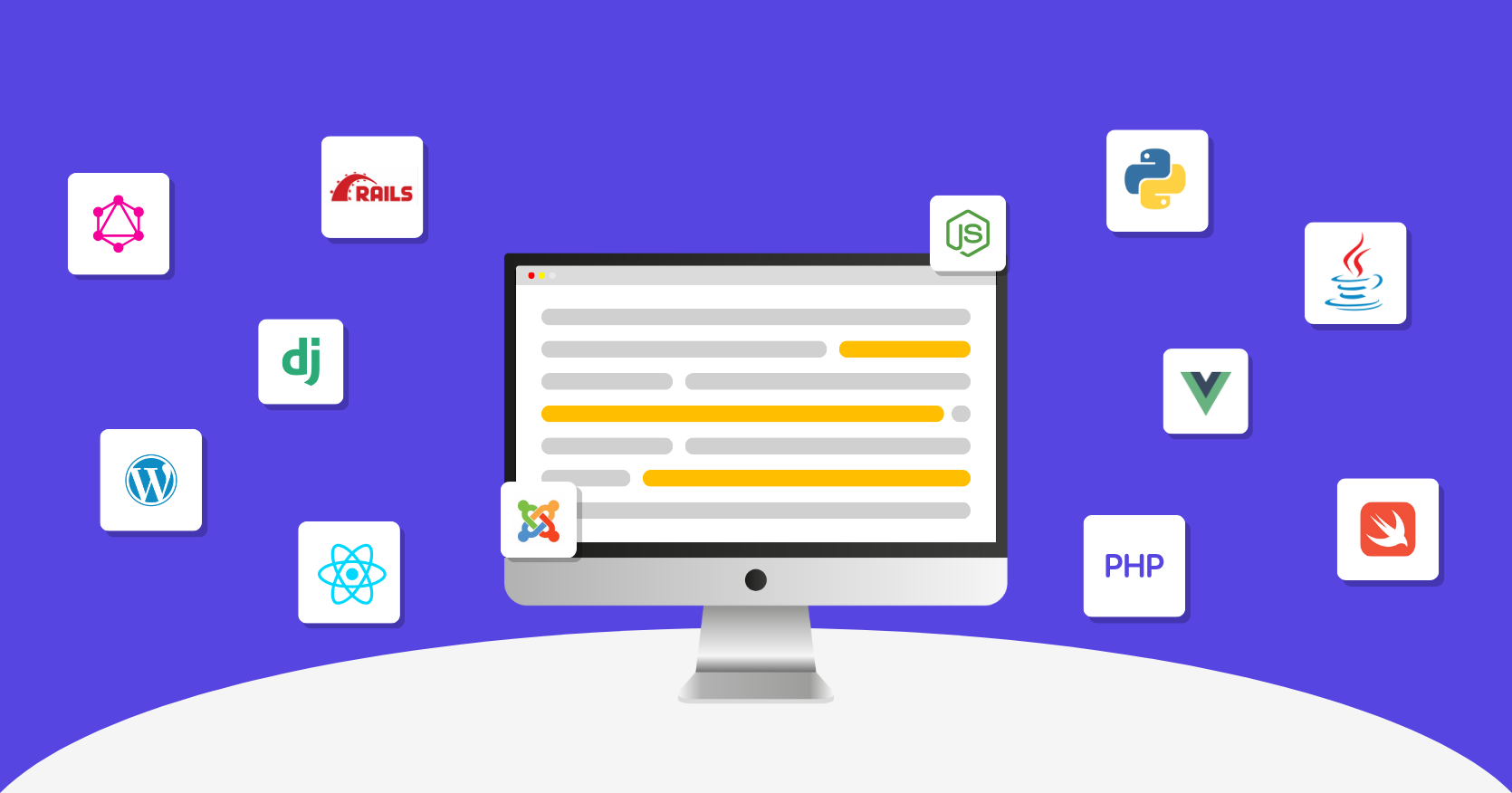
A well-architected tech stack is the foundation upon which modern web applications are built. It’s the intricate interplay of programming languages, frameworks, and databases that powers the digital experiences we’ve come to rely on.
In this blog post, we’ll delve into the key components of a robust tech stack, explore popular choices, and provide insights into how to make informed decisions for your next project.
What is a Tech Stack, and Why Does it Matter?
A tech stack, in simplest terms, is the combination of technologies used to build and run a website or application. It’s the underlying framework that determines how a website functions, performs, and interacts with users.
The tech stack directly impacts a website’s performance, adaptability, and security. Choosing the right tech stack ensures a smooth user experience, reduces maintenance needs, and supports future growth without escalating costs.
The Role of Frontend, Backend, and Full-Stack Technologies
Frontend Development
Frontend development focuses on the parts of a website or application that users interact with directly. This layer encompasses design elements, navigation, and how content is displayed across various devices.
Frontend technologies are responsible for creating a visually appealing and user-friendly interface, as well as ensuring that the website functions seamlessly across desktop, tablet, and mobile views.
Popular Frontend Technologies:
- HTML (HyperText Markup Language): Forms the structural basis of webpages, defining the content layout.
- CSS (Cascading Style Sheets): Controls the styling and layout, from colors to font choices and spacing.
- JavaScript Frameworks: Frameworks like React and Angular allow developers to build interactive and dynamic user interfaces efficiently. They simplify complex tasks and add enhanced features, such as animations and responsive layouts.
Frontend development aims to create an engaging experience for users, making websites both intuitive and visually appealing.
Backend Development
Backend development handles the behind-the-scenes processes that allow a website to function smoothly. The backend is responsible for managing databases, processing server requests, authenticating users, and supporting any interactive or data-driven components.
It forms the engine of a website, ensuring that data flows seamlessly and that the website performs reliably, even under heavy traffic.
Popular Backend Technologies:
- Node.js: Known for its fast processing speed, Node.js is widely used for building scalable network applications, especially when handling a large number of real-time requests.
- Ruby on Rails: A robust and highly readable framework for building full-featured applications with a strong focus on convention over configuration, reducing development time.
- PHP: Known for its versatility, PHP remains a popular choice for dynamic content and database interactions, especially in content management systems like WordPress.
Backend technologies manage essential business website operations, from securing data to handling server interactions and powering interactive features.
Full-Stack Development
Full-stack development involves working with both frontend and backend technologies, covering the full scope of web development. A full-stack developer is skilled in managing everything from database management to frontend visuals.
For complex, large-scale applications, full-stack frameworks can be highly effective in streamlining the development process.
Popular Full-Stack Frameworks:
- MEAN (MongoDB, Express.js, Angular, Node.js): Ideal for creating dynamic applications with JavaScript on both the client and server sides.
- MERN (MongoDB, Express.js, React, Node.js): Similar to MEAN but replaces Angular with React, offering a flexible and interactive frontend experience.
- LAMP (Linux, Apache, MySQL, PHP): A traditional full-stack option, commonly used in web hosting and e-commerce applications.
How Frontend and Backend Components Work Together
Frontend and backend components must work in harmony to create a cohesive website experience. For instance, when a user submits a form on the frontend, the backend processes the request, retrieves relevant information from the database, and returns a response that the frontend then displays.
This smooth data flow ensures that users can interact with the website in real time without encountering errors or delays.
Together, the frontend and backend serve as the foundation for a website’s success, combining visual design, functionality, and robust data management to power an effective online presence.
At Elif Technologies, our expertise spans both frontend and backend development, allowing us to build websites that are not only visually appealing but also technically sound and scalable.
How the Right Tech Stack Affects Website Outcomes
- Performance:
Website loading speed, response time, and ability to handle high traffic depend on the efficiency of the tech stack. An optimized stack ensures smooth functionality, meeting the demands of a growing user base without compromising speed. - Scalability:
Businesses evolve, and so should their websites. A scalable tech stack supports future expansion and feature additions without needing a complete rebuild. Selecting a scalable stack ensures a website can adapt to new business requirements, whether it’s higher traffic, new services, or additional features. - Security:
Protecting user data and ensuring secure interactions is paramount. The right tech stack incorporates security measures that safeguard against vulnerabilities and data breaches. For example, technologies like SSL protocols, secure databases, and safe coding practices are integral to a secure backend. - Cost Efficiency:
Development and maintenance costs are directly influenced by the chosen tech stack. Some stacks require more specialized skills and ongoing updates, while others may offer cost savings through open-source frameworks and lower hosting expenses.
An appropriate tech stack allows for cost-effective development and easy future upgrades, avoiding the need for extensive rework as the business grows.
In the following sections, we’ll delve deeper into specific tech stacks and their suitability for various business needs. Stay tuned to learn how elif Technologies can help businesses make informed decisions to build a successful online presence.
Factors to Consider When Choosing a Tech Stack for Your Website
Selecting the right tech stack is critical for building a successful website that meets both current and future needs. Here’s an overview of the primary factors to consider when making this choice.
Business Size and Growth Potential: Supporting Scalability
The scale of a business can heavily influence tech stack decisions. For small businesses or startups, a lightweight stack that can expand with business growth may be ideal. Larger companies or those anticipating high growth should prioritize a tech stack that supports scalability.
For example, scalable backend frameworks like Node.js and databases like MongoDB allow for adding resources as traffic and demand increase, ensuring the website can grow without sacrificing performance.
Website Type: Matching Stacks to Specific Needs
Different types of websites have unique requirements, which means some tech stacks are better suited to specific purposes:
- E-commerce Sites: Security, speed, and database management are key. Stacks like MEAN or LAMP with a robust backend and secure payment gateway integration are commonly used for e-commerce.
- Portfolio Sites: Lightweight and visually focused tech stacks such as HTML, CSS, and JavaScript frameworks like React can create interactive, visually appealing websites without heavy backend needs.
- SaaS Platforms: These require secure user authentication, data processing, and reliability. Full-stack frameworks like MERN are often chosen to handle both the dynamic frontend and the backend that SaaS platforms demand.
Understanding the website’s purpose helps in selecting a stack that aligns with its functional needs and long-term objectives.
Performance Requirements: Ensuring Speed and Reliability
Performance plays a significant role in user experience, search rankings, and overall effectiveness. The chosen tech stack should be capable of delivering fast page loads and handling high traffic without downtime.
For instance, Node.js offers non-blocking, asynchronous processing, which can boost speed and handle large-scale applications effectively. Frameworks like Express.js combined with React are also popular for their ability to build dynamic applications that perform well under load.
Security Concerns: Protecting User Data
Security is crucial, especially for websites handling sensitive data like user information or payments. Tech stacks that incorporate security protocols and best practices are essential to minimize risks. For example, frameworks like Django come with built-in security features, and Node.js applications can be secured with additional packages like Helmet.js for data protection. Secure authentication, encryption, and regular updates are necessary components of a secure tech stack.
Development Team Expertise: Leveraging In-House Skills
The tech stack should align with the development team’s expertise to optimize productivity and reduce onboarding time. If the team is well-versed in a specific technology, choosing a stack that aligns with their skillset, such as React for frontend or Python/Django for backend, can accelerate development.
Investing in technologies familiar to the team allows for a smoother workflow, fewer errors, and easier maintenance.
Cost and Budget Considerations: Balancing Resources
Cost is a critical factor, especially for startups or small businesses. Open-source technologies, such as Linux-based stacks, can reduce initial expenses, while proprietary tools or managed hosting may add to costs.
The tech stack influences both development and maintenance expenses, so it’s important to evaluate options like PHP and MySQL (often used in LAMP) for budget-friendly projects or opt for cloud-based solutions when aiming for high availability and lower maintenance.
Time to Market: Impacting Development Speed
In some cases, getting the website launched quickly is a priority. Certain tech stacks can reduce development time, thanks to pre-built libraries, reusable components, and support for rapid deployment. For instance, Ruby on Rails is known for its conventions that allow for faster development.
A tech stack with a shorter time to market can be essential when timing is a competitive advantage, allowing the site to be operational sooner without compromising quality.Selecting a tech stack that balances all these factors ensures the website is well-suited to the business’s objectives, user expectations, and future growth.
Comparing Popular Tech Stacks for Business Websites: Benefits and Drawbacks
Choosing the right tech stack can significantly impact a website’s functionality, scalability, security, and user experience. Here’s an overview of the most popular frontend, backend, and full-stack options, along with their pros and cons, to help determine the best fit for various business needs.
Frontend Stacks: React, Angular, Vue.js
Frontend frameworks enable developers to build dynamic, interactive user interfaces, each with its unique strengths for business applications.
React
- Pros: React is highly flexible, enabling fast updates with its virtual DOM, and is backed by a vast library ecosystem. It’s well-suited for highly interactive interfaces, making it a popular choice for content-driven sites, e-commerce, and SaaS platforms.
- Cons: Due to React’s flexibility, it often requires more setup and configuration, making it less beginner-friendly. Additionally, React apps can get complex to manage as they grow.
Angular
- Pros: Angular is a complete framework with built-in solutions for state management, routing, and HTTP services, which simplifies development. It’s ideal for large-scale enterprise applications where a structured setup is beneficial.
- Cons: Angular’s learning curve can be steep, and its verbose syntax can add development time. The framework is also heavier than other frontend options, potentially impacting page load times for simple applications.
Vue.js
- Pros: Vue is known for its gentle learning curve and can integrate well with existing projects. It’s lightweight, making it ideal for smaller applications, portfolios, and less complex business websites.
- Cons: While gaining popularity, Vue has a smaller community and fewer resources compared to React and Angular, which can limit support for large-scale projects.
Backend Stacks: Node.js, Python (Django), Ruby on Rails, PHP
Backend technologies handle data management, server requests, and essential website operations. Each backend stack has unique features that cater to specific business needs.
Node.js
- Pros: Node.js is known for its non-blocking, asynchronous processing, which enhances performance, especially for real-time applications and high-traffic sites. It’s widely used for scalable applications.
- Cons: Node.js may struggle with CPU-intensive tasks due to its single-threaded nature, which can limit performance for certain types of applications.
Python (Django)
- Pros: Django is a high-level Python framework that promotes rapid development with its “batteries-included” philosophy. It’s a great option for data-driven applications where security and scalability are priorities.
- Cons: Django can be somewhat restrictive for projects that require significant customization, and the framework may not be as fast as other backend options for certain applications.
Ruby on Rails
- Pros: Rails is known for its developer-friendly conventions, enabling rapid development and simplifying coding. It’s an excellent choice for applications where time to market is a priority.
- Cons: Rails has slower performance compared to some other frameworks and may struggle with scalability for very high-traffic websites without extensive optimization.
PHP
- Pros: PHP remains a staple for many business websites, especially those using CMS platforms like WordPress. It’s cost-effective and has a large, supportive community.
- Cons: PHP is less structured compared to other backend languages, and older codebases can be harder to maintain. For high-performance applications, PHP may require additional configurations to match the speed of other frameworks.
Full-Stack Frameworks: MEAN, MERN, LAMP
Full-stack frameworks allow for complete development (both frontend and backend) within a single stack, providing flexibility and reducing setup time.
MEAN (MongoDB, Express.js, Angular, Node.js)
- When to Use: MEAN is ideal for fast, dynamic web applications. It offers a JavaScript-only stack, making development straightforward for real-time applications and scalable websites.
- Pros: The stack enables smooth data transfer between server and client, leveraging JavaScript’s asynchronous capabilities for faster performance.
- Cons: Since it heavily relies on JavaScript, MEAN may lack the flexibility required for non-JavaScript environments.
MERN (MongoDB, Express.js, React, Node.js)
- When to Use: MERN is a top choice for websites requiring a dynamic user interface, such as single-page applications (SPAs) and interactive web applications.
- Pros: React’s virtual DOM speeds up rendering, making MERN ideal for applications with frequent updates or user interaction.
- Cons: The MERN stack may require additional configuration for handling complex business logic due to the absence of a conventional server-side MVC structure.
LAMP (Linux, Apache, MySQL, PHP)
- When to Use: LAMP is a classic full-stack choice for content-driven websites, particularly where a CMS is needed, such as blogs, corporate websites, and e-commerce.
- Pros: It’s cost-effective, mature, and highly customizable, with a vast library of tools and plugins.
- Cons: LAMP is primarily suited to monolithic applications, so it may lack the scalability and performance features required for highly interactive or real-time applications.
Each stack has strengths suited to different project types. Selecting the right tech stack means weighing performance, scalability, ease of maintenance, and alignment with business goals. Our team at Elif Technologies specializes in advising clients on the optimal stack to ensure a reliable, high-performing website that grows with their business.
Choosing Between a Monolithic vs. Microservices Architecture
In building business websites, one critical decision is selecting the right architectural approach. The choice between a monolithic and a microservices architecture can influence scalability, development flexibility, and performance. Here’s a breakdown of each architecture type, their best use cases, and the factors that guide this decision.
What is Monolithic Architecture?
A monolithic architecture is an approach where all components of a website or application are unified into a single codebase or executable. This design includes the user interface, business logic, and database management, all integrated and deployed as one cohesive unit.
- Use Cases: Monolithic architecture is ideal for simpler, smaller-scale websites, such as small to medium-sized business websites, portfolio sites, and traditional content-driven applications.
- Advantages:
- Simpler Development and Deployment: All components are managed as one unit, which simplifies the deployment and maintenance process.
- Efficient Performance: With components running together, monolithic sites often experience lower latency and faster data access, which improves user experience.
- Lower Costs: Development, maintenance, and hosting are generally more cost-effective, as monolithic systems don’t require complex infrastructure.
- Drawbacks:
- Scalability Challenges: Scaling specific parts of the application independently is challenging, as the entire codebase is interconnected.
- Maintenance Overhead: As the application grows, making changes or updating specific functions can become complex and may introduce bugs in unrelated areas.
What is Microservices Architecture?
Microservices architecture divides an application into smaller, independent services that communicate via APIs. Each service handles a specific function, such as user management, data processing, or payment processing, and can be developed, deployed, and scaled independently.
- Use Cases: Microservices architecture is highly suited for large-scale applications, such as e-commerce platforms, SaaS solutions, and applications that require frequent updates and modular scaling.
- Advantages:
- Independent Scaling: Each service can be scaled independently based on demand, optimizing resource allocation and reducing costs.
- Enhanced Flexibility and Agility: Independent services allow different teams to develop, update, and deploy each service autonomously, leading to faster iterations and greater flexibility.
- Resilience and Fault Isolation: Issues in one service don’t affect the entire application, which improves overall system reliability.
- Drawbacks:
- Increased Complexity: Managing multiple services requires a more complex infrastructure, including deployment, monitoring, and debugging.
- Higher Costs: Separate hosting, networking, and data storage resources for each microservice can increase operational costs.
- Latency Concerns: Since each service communicates through APIs, data transfers may introduce latency, potentially impacting the performance of the application.
When is Monolithic Architecture Better Suited?
Monolithic architecture is generally the best choice for:
- Small to Medium-Sized Websites: Websites with relatively low traffic and straightforward functionality benefit from the simplicity and cost-effectiveness of monolithic systems.
- Applications with Limited Scope: For applications that do not require frequent updates or changes, a monolithic approach provides a stable, maintainable structure.
- Startups or MVPs (Minimum Viable Products): Monolithic architecture allows faster development and deployment for startups looking to launch quickly and scale later if necessary.
When to Use Microservices Architecture
Microservices architecture is beneficial for:
- Large-Scale, Dynamic Websites: Websites or applications with high traffic volumes, such as e-commerce sites, social media platforms, or streaming services, benefit from microservices’ scalability and resilience.
- Applications Requiring Frequent Updates: Microservices architecture enables continuous integration and delivery, ideal for applications that require frequent updates and iterative development.
- Complex, Modular Applications: Applications with multiple, distinct functions, such as CRM systems, payment gateways, or inventory management, can utilize microservices to optimize each function individually.
The choice between monolithic and microservices architecture should align with the website’s scale, complexity, and performance requirements. Monolithic architecture works well for smaller, straightforward applications that prioritize simplicity and cost-effectiveness.
Meanwhile, microservices architecture is advantageous for larger, complex applications that need flexibility, scalability, and resilience. Understanding these distinctions helps in making an informed choice that supports both current functionality and future growth.
Conclusion
Choosing the right tech stack is foundational to a website that grows with your business. A carefully selected combination of frontend, backend, and database technologies ensures that your site will scale effectively, stay secure, and continue to deliver a strong user experience as your needs evolve.
At Elif Technologies, our team of experts is ready to help identify the best tech stack for businesses unique goals, setting business up for lasting digital success.
Reach out to us to discuss how we can build a tech foundation that supports business’s future.